
Responsible Gambling at PokerStars Casino
At PokerStars Casino, we believe gambling should remain an enjoyable leisure activity rather than a source of stress, financial pressure, or emotional harm. Our website is committed to promoting safer gambling practices for players across the United Kingdom while providing educational content, casino reviews, payment method insights, and gambling-related guides.
We encourage all users to approach online gambling with awareness, discipline, and realistic expectations. While many people gamble recreationally without experiencing negative consequences, gambling can become harmful when it affects emotional wellbeing, relationships, work responsibilities, or financial stability.
This Responsible Gambling page explains practical ways to stay in control, recognise problematic gambling patterns, access support services, and protect vulnerable individuals. We also encourage users to review our Terms & Conditions, Privacy Policy, and FAQ pages for additional guidance about using our platform responsibly.
Our Commitment to Safer Gambling Standards in the UK
Responsible gambling is a core principle of the UK gambling environment and is strongly supported by regulatory frameworks established by the UK Gambling Commission. As an informational iGaming and affiliate website, we aim to provide accurate guidance that helps visitors make informed decisions when engaging with gambling operators, casino bonuses, or betting products.
We support a transparent gambling culture where users understand the risks connected to casino games, slots, poker, sports betting, and other gambling activities. Gambling outcomes are always based on chance, and there is no guaranteed strategy that ensures consistent profits or long-term financial gain.
Our platform encourages players to monitor gambling habits carefully, avoid emotional betting decisions, and seek assistance immediately if gambling starts negatively affecting mental health, finances, or personal relationships. We also recommend reviewing safer gambling materials provided by official UK organisations.
How to Recognise Harmful Gambling Behaviour
Problem gambling can develop gradually and may not always be immediately obvious. Many individuals continue gambling despite emotional distress or financial difficulties because they believe losses can eventually be recovered. Recognising early warning signs can help prevent more serious gambling-related harm.
Some people gamble more frequently during periods of anxiety, loneliness, stress, or frustration. Over time, gambling may become a coping mechanism rather than a recreational activity. This can increase emotional dependency and make it harder to stop.
Warning signs associated with harmful gambling behaviour may include:
- Spending more money than originally planned
- Attempting to recover previous gambling losses
- Borrowing money to continue gambling
- Hiding gambling activity from family or friends
- Neglecting work, education, or personal obligations
- Feeling anxious, irritable, or depressed after gambling
- Gambling as a response to emotional stress
- Losing interest in hobbies or social activities
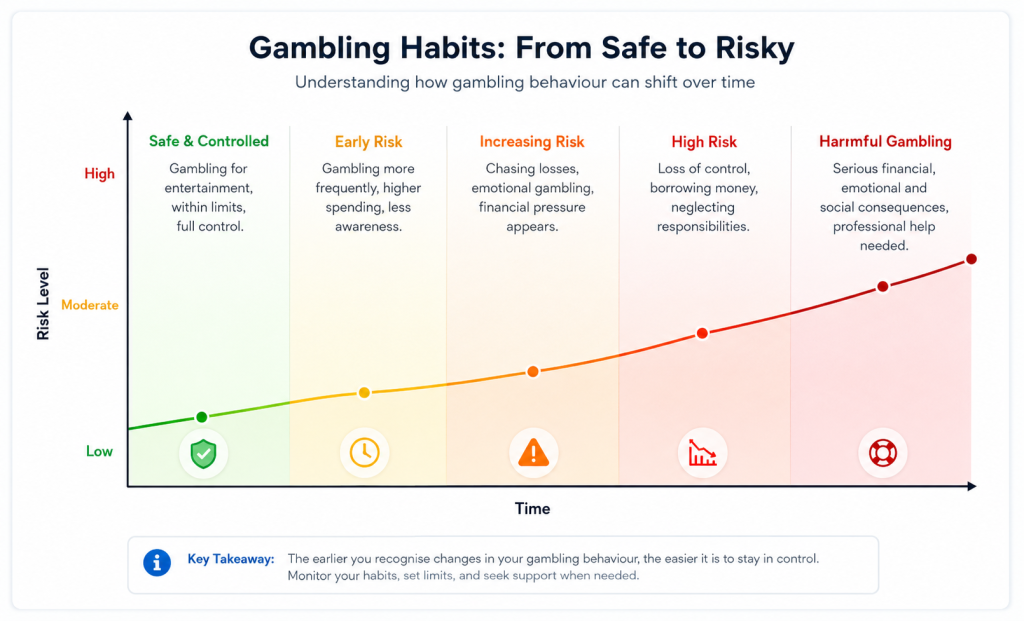
If any of these behaviours become familiar, it may be necessary to pause gambling activity and seek external support before the situation escalates further.
Building Safer Gambling Habits
Responsible gambling involves maintaining control over both time and spending. Setting personal boundaries before gambling sessions can significantly reduce the risk of impulsive behaviour and emotional decision-making.
Players should always gamble with money specifically allocated for entertainment purposes rather than essential household expenses. Gambling should never interfere with rent payments, utility bills, savings goals, debt repayments, or family responsibilities.
Practical safer gambling strategies include:
- Setting strict deposit and spending limits before playing
- Taking regular breaks during gambling sessions
- Avoiding gambling while upset, stressed, or intoxicated
- Tracking gambling activity and financial losses honestly
- Balancing gambling with other recreational activities
- Accepting losses as part of gambling entertainment
- Never viewing gambling as a source of income
Healthy gambling habits are based on discipline, realistic expectations, and emotional awareness. If gambling stops feeling enjoyable, taking a break may be the safest decision.
Emotional Wellbeing and Mental Health Awareness
Emotional wellbeing plays a major role in responsible gambling behaviour. People experiencing stress, anxiety, isolation, or depression may become more vulnerable to harmful gambling patterns, especially when gambling is used as a distraction from emotional difficulties.
Losses can trigger feelings of frustration, guilt, embarrassment, or hopelessness. Some players may continue gambling in an attempt to regain control emotionally or financially, which often increases risk exposure and deepens emotional strain.
Maintaining healthy routines outside gambling is extremely important. Regular sleep, exercise, social interaction, hobbies, and professional mental health support can all contribute to stronger emotional resilience and improved decision-making.
Individuals struggling emotionally should not hesitate to contact professional support organisations. Confidential services are available throughout the UK for anyone affected by gambling-related distress or compulsive behaviour.
- Samaritans — emotional support helpline available 24/7 for anyone experiencing distress.
- Gambling Therapy — international emotional support and online counselling resources.
- BigDeal — support and educational guidance focused on young people affected by gambling harms.
Managing Gambling Budgets and Financial Control
Financial discipline is one of the most important aspects of safer gambling. Players should always establish realistic budgets before participating in gambling activities and avoid increasing stakes after losing money.
Using borrowed funds, credit cards, overdrafts, or savings intended for essential expenses can create serious long-term financial consequences. Gambling losses should never be treated as debts that must be immediately recovered.
The following table outlines useful budgeting principles for safer gambling:
| Financial Practice | Safer Gambling Benefit |
|---|---|
| Setting weekly spending limits | Helps maintain financial discipline |
| Tracking deposits and withdrawals | Improves awareness of gambling habits |
| Separating gambling funds from bills | Protects essential household finances |
| Using time limits | Reduces impulsive gambling sessions |
| Taking cooling-off periods | Allows emotional reset after losses |
If gambling starts creating debt, missed payments, or financial anxiety, seeking external financial advice and gambling support should become a priority.
UK Bank Gambling Blocks and Payment Controls
Many UK banks now provide gambling transaction blocking tools that help customers restrict gambling-related payments. These banking controls can be highly effective for individuals attempting to reduce or pause gambling activity.
Bank gambling blocks are usually accessible through mobile banking applications and may prevent transactions linked to gambling merchants. Some providers also include cooling-off periods before blocks can be removed, helping users avoid impulsive reversals.
Financial institutions offering gambling management features may also provide spending notifications, budgeting tools, or card controls that support safer money management practices.
Combining bank restrictions with personal budgeting plans and self-exclusion measures often creates a stronger barrier against uncontrolled gambling behaviour.
Self-Exclusion and Gambling Blocking Software
Self-exclusion systems allow players to restrict access to gambling platforms for a chosen period. These tools are designed to support individuals who feel unable to control gambling activity independently.
Technology-based gambling blocking software can also help prevent access to gambling websites across mobile devices, tablets, and desktop computers. Such tools are commonly used alongside counselling and behavioural support programmes.
Useful self-exclusion and blocking resources include:
- GAMSTOP — UK national self-exclusion scheme covering licensed online gambling operators.
- Gamban — gambling blocking software for mobile and desktop devices.
- BetBlocker — free blocking software designed to restrict gambling access.
- GamBlock — advanced gambling website blocking technology.
- NetNanny — parental and internet filtering software helping protect vulnerable users.
Self-exclusion should be viewed as a positive and proactive decision rather than a punishment. Many people use these tools successfully while rebuilding healthier habits and routines.
Protecting Children and Vulnerable Individuals
Under UK law, gambling is strictly restricted to adults aged 18 and over. Children and vulnerable individuals may face increased risks associated with gambling exposure, particularly through online advertising, social media content, or unrestricted device access.
Parents and guardians should take active steps to prevent minors from accessing gambling websites, apps, or payment methods. This includes using password protection, age-restricted accounts, internet filters, and parental control software.
Vulnerable persons experiencing emotional instability, financial hardship, or addiction-related issues may also require additional safeguards and support systems. Family involvement and open communication can play an important role in early intervention.
We strongly encourage users to maintain secure account credentials and never allow minors access to gambling-related platforms or gambling payment facilities.
Common Gambling Myths and Misconceptions
Misunderstanding how gambling works can contribute to risky behaviour and unrealistic expectations. Many players mistakenly believe they can predict outcomes, influence random events, or recover losses through persistence.
Casino games operate using random number generators or probability-based systems. Previous outcomes do not influence future results, and no betting pattern guarantees success over time.
Common gambling myths include:
- Believing a losing streak means a win is “due”
- Assuming skilled betting systems eliminate risk
- Thinking gambling can solve financial difficulties
- Viewing bonuses as guaranteed profit opportunities
- Believing emotional intuition improves winning chances
Understanding the role of chance and randomness is essential for maintaining realistic expectations and avoiding emotionally driven gambling decisions.
Support for Families and Close Friends
Gambling-related harm can affect not only the individual gambling but also partners, children, relatives, and close friends. Emotional stress, financial difficulties, secrecy, and trust issues may place serious pressure on personal relationships.
Family members often struggle to understand compulsive gambling behaviour or feel uncertain about how to provide support effectively. Encouraging honest communication and avoiding judgmental confrontation can help create a safer environment for recovery discussions.
External organisations across the UK offer support specifically for affected family members and carers. Counselling, group discussions, and educational resources may help individuals better understand gambling addiction and coping strategies.
- GamCare — support services for both gamblers and affected family members.
- Gamblers Anonymous UK — peer support meetings for individuals experiencing gambling problems.
- Gordon Moody — residential treatment and recovery support services.
Professional Gambling Addiction Treatment Services
Professional help may become necessary when gambling behaviour creates ongoing emotional distress, financial instability, relationship damage, or compulsive patterns that feel difficult to control independently.
Specialist treatment programmes in the UK provide counselling, cognitive behavioural therapy, residential rehabilitation, and mental health support for individuals affected by gambling addiction.
Healthcare and treatment organisations available in the UK include:
- National Problem Gambling Clinic — NHS-supported treatment and psychological services.
- NHS Northern Gambling Service — specialist regional gambling support.
- NHS Southern Gambling Service — clinical treatment and recovery assistance.
- West Midlands Gambling Harm Clinic — professional gambling addiction support and therapy.
Seeking help early can significantly improve recovery outcomes and reduce long-term emotional and financial harm.
Affiliate Disclosure and Informational Purpose
PokerStars Casino operates as an informational gambling affiliate website. Our platform publishes casino reviews, promotional content, gambling guides, payment method information, bonus comparisons, and educational materials intended for users located in the United Kingdom.
Some pages on our website may contain affiliate links. This means we may receive compensation if users register with third-party gambling operators through selected links. However, affiliate relationships do not influence our commitment to responsible gambling principles or safer gambling messaging.
We do not operate gambling services directly, process wagers, or provide gambling accounts. Users should independently review operator terms, licensing information, and safer gambling tools before participating in any gambling activity.
Additional information about our website and editorial practices can be found on our About Us page.
Contact Information and Responsible Gambling Enquiries
If you have questions regarding responsible gambling practices, affiliate disclosures, safer gambling information, or website content, you may contact our team directly.
We encourage users experiencing gambling-related difficulties to seek immediate assistance from professional support organisations listed throughout this page. External support services can provide confidential advice, counselling, and emergency assistance.
Email: [email protected]
Contact Page: https://pokerstarscasinouk.com/contact/
Responsible Gambling Enquiries: Please use the contact channels above for concerns relating to safer gambling content, affiliate transparency, or gambling support information.
Frequently Asked Questions
What is responsible gambling?
Responsible gambling refers to maintaining control over gambling activity by setting financial and time limits, understanding risks, and treating gambling strictly as entertainment rather than a way to make money.
How can I tell if gambling is becoming a problem?
Common signs include chasing losses, hiding gambling behaviour, borrowing money, neglecting responsibilities, or feeling anxious and distressed about gambling outcomes.
What should I do if I cannot control my gambling?
You should immediately consider self-exclusion tools, gambling blocking software, and professional support organisations such as GamCare, GAMSTOP, or NHS gambling treatment services.
Can UK banks block gambling transactions?
Yes. Many UK banks provide gambling transaction blocks through online banking or mobile apps, helping customers restrict gambling-related payments.
Is gambling addiction recognised as a serious issue?
Yes. Gambling addiction can create severe emotional, financial, and social consequences. Professional treatment and counselling services are available throughout the United Kingdom.
Does your website provide gambling services directly?
No. PokerStars Casino is an informational affiliate website that publishes reviews, guides, and gambling-related content. We do not operate gambling products directly.